


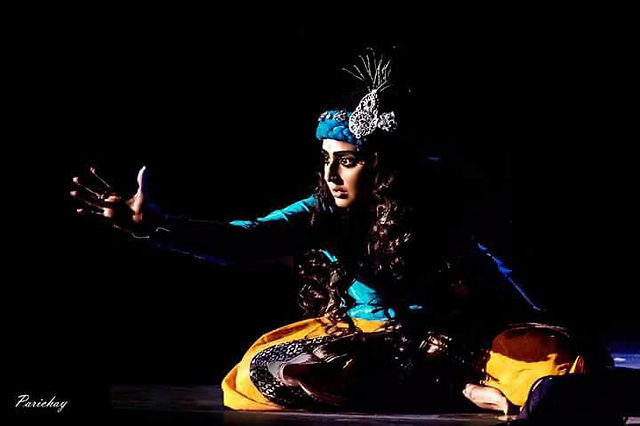
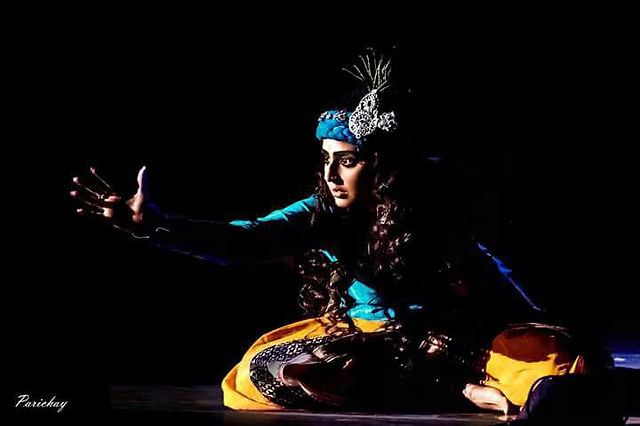
This is not the first time that Shrimati Alokparna Guha is experimenting with a dramatized mythology through Kathak. If Hridimanthanam had told us the story of Tapati and her search for true love, through a dramatized Kathak, Ehi Kesava, narrates the story of Kathak itself. The kathak presentation by Pushpak, dramatizes the history of Kathak as an art form, using “Kesava” as a metaphor of love, where love can also be the love for the art form. Possibly, creativity is the highest kind of worship, which Alokparna, passionately, and very articulately as a dancer, teacher, and researcher tells us through her dance ideations. Using theatrical skills in kathak choreography, Shrimati Guha’s presentations are not really dance-dramas as one would think. As she told Caesurae , this is a different form of experimentation where her endeavour is to fuse together her passion for theatre and dance, in such a way that her dance presentations use dialogue, rhythm, music within the stylistics of theatre, where dialogue becomes inseparable from rhythm. The form and content become one, in the stylistics-aesthetics of dialogue and rhythm. Both Hridimanthanam and Ehi Kesava, engage in philosophical discourse, using mythology and history as contra-disciplinary inputs in her presentation. Rhythm, and melody arranged by a sensitive artiste (percussionist) like Subhajyoti Guha, who is both her creative and life partner, blend with her ideations perfectly. A presentation to reach that level of perfection requires research, imagination, stage-skills, choreography skills and thorough rehearsals. Passionate about her work that Alokparna Guha is, the rehearsals, and hard work are transformed in her joy of desiring and presenting art, through Kathak’s Katha.